Friday, February 21, 2014

What's in a Name?


Our names are our past, our present, and our future. They connect us to the history that has made us, our circumstances that in part define us, and sometimes, the possibilities that will be open to us. When I stumbled across this Al Jazeera cultural series spotlight, "What's in a name," it was an idea I just couldn't shake. Thoughts of ascribed identity, historical implications, social mobility, and gender assignment, among other things, flooded my mind. These names we are given speak so much about who we are, but yet, leave so much out. One hundred years ago, a name would delineate our gender, our bloodline, our nationality, our ancestry, and sometimes, our socio-economic status. Now, arguably, none of that is true. But, nevertheless, names link our thoughts to ideas about the world. Without ever meeting a person, a name can paint a mental picture of what that person looks like. It can generate discriminatory thoughts. It can incite racial profiling. It can regionalize, nationalize or racialize people. Think about when you hear/see first names like Shemiqua, Bobbie Sue, Jesus, Josefina, Ahmed, Vladimir, Olga or Francisco. Immediate types came to mind, right? And last names, which are passed down through time, mean so much to some people. But in different ways, I would argue. 
In this article http://projects.aljazeera.com/2014/namestories/#intro , Al Jazeera highlights 3 main stories. The first, is Emily Tanaka, a half Caucasian (her mother), half Japanese (her father) woman. When she travelled to Japan to visit family, no one would believe she was actually Japanese, because she looks very Caucasian. Everyone was convinced she was married to a Japanese man. So when she got married (to a gentleman by the name of Smith), she dealt with an internal struggle of sorts as to whether or not she should keep her last name, take her husbands, or hyphenate. By taking her husbands, she felt she would lose part of her cultural identity, the part that she so proudly felt represented her father. The second is Cecilia Gentili, an Argentinian woman who when born, was named Alejandro Gabriel Gentili. In her 20's Cecilia decided she would move forward with a complete gender re-assignment (from male to female) so her body would reflect who she was on the inside. Through much of this time, friends referred to her as Alex or Alexa (nicknames from Alejandro). Once her surgeries were finished, Cecilia decided it only made sense to legally change her name. To her, Alex was so androgynous, commonly used as a name for both men and women. She wanted to affirm her identity by selecting a name that was unmistakably female, much as she was. Her name and her identity finally became aligned, and ultimately helped her to define to the outside world her true identity. The third is John H. Doe's story. He is a Korean American from New York City, New York whose given name at birth was Jang Huan Do. When he was in grade school, he urged his family to change their name to Doe, because it would help Americanize them. Also, he was tired of people calling him Jang (how it rhymes with sang), and Do (like to do, instead of Doe). In efforts to assimilate, his family did change, and from that point forward he went by the name John. In 3rd grade, while reading the dictionary, a friend pointed out his name was actually in there. John Doe was listed as a "legal, fictitious identity which does not exist." 
The meanings of their name differs in each story, but all represent part of their identity. Identities that these three have found equate to negotiations of who they are with society.
I feel on some level, I understand the struggle with ones' name and identity. Being adopted slightly later in life, I was completely cognizant of my name change. And so was everyone else in my grade. Having to explain why in 4th grade your name was one thing, and in 5th, another, is interesting to do for a 9 year old. But more than that, the change of my name signified a change in my identity. I was no longer Chelsey Bowen from Texas, I was Chelsi Hudson from Tennessee. I was, from that point forward, a Hudson. My "family" signified those currently in my life, that shared my name, instead of those in my past, who no longer did. I had to learn a new way to sign my name, and become used to responding to a different one. Eventually, I became used to it, as did everyone else, but that awkward time sticks with me. 
So, although names are always subject to others interpretations, it is not always indicative of who they are, where they come from, or what they believe. 

Thursday, February 20, 2014

An Idiot Abroad


 Youtube URL
http://www.youtube.com/watch?v=BHmgqcDGRXI

This week, our readings discuss cultural adaptation and anxiety, and while reading I was reminded of my (and my roommates’) latest Netflix obsession: An Idiot Abroad.  This show is about a man named Karl (originally from the U.K.) who is not exactly the picture of cultural cognizance or cultural sensitivity. Karl’s friends, Ricky Gervais and Stephen Merchant, send him to visit different locations around the world for two reasons: 1) to expose Karl to different cultures in order to give him a broader perspective and 2) to laugh at Karl’s culture shock and anxiety.  Karl travels to these different countries for a few days and has worldly experiences that cannot be had in his home in London.  While commentating and whining along the way, Karl treks these foreign lands, interacts with people of a different culture, eats unfamiliar food, and endures a multitude of physical and emotional discomforts.  Unfortunately, because he spends a limited amount of time in these locations, it’s difficult to put labels to how he handles difficult and uncomfortable situations.  Last night, as I watched him eating and sleeping in a cave in Jordan and making comments such as “it’s not so bad,” I wondered if this meant Karl had adapted to some degree and, if not, where is that line drawn? Do we know, that we’re adapting, assimilating, or acculturating as it happens and when can we say we’ve done these things? 

A Domestic Third Culture Kid


The concept of Third Culture Kids was rather interesting to me.  Of course the article and much of the concept refers to kids who have lived abroad, away from their home culture for a portion of their lives.  I think that a similar experience can be had for children who move domestically.  I for one, was born in Denver, moved from Denver to Cleveland, Cleveland to Boise, Boise to Cleveland, Cleveland to Boise, Boise to Cleveland, and Cleveland to North Carolina all before I was 18.  Each time I moved to Cleveland, we moved to a new suburb. Though the cultural changes are not nearly as drastic as someone who moves internationally, there are distinct similarities.  For example, the idea of constantly coming and going, and lives always changing, as well as the backdrop of physical surroundings fluctuating is relevant to my experience (Polluck 17).  Also, much of the moving happened in my developmental years, when my sense of identity was being shaped.  I have often attributed my ability to adapt to change to these years of my life.  It instilled a sense of adventure and lack of fear for things that were new and different.  It also seemed to connect me with friends who were “new” to the school.  And though it is all within the states, the culture in Boise, Idaho is quite different from that of Cleveland, Ohio.  The cultural changes were something that I was able to see at a rather young age, making me more aware of my surroundings and appreciating the new friends I was making and the ones that were in the town I previously lived.  I found this video on Third Culture Kids.  I laughed at the beginning part when the interviewees were asked where they were from, and all of them had this blank look on their face, silent, not certain how to answer.  Though I’ve lived in Denver for six years and am from here originally, I still do that sometimes when people ask me where I am from.  I noticed it the most when I was in college and people would ask where I was from.  I now have accepted the term, “I am from here,” but it took me a while to get used to feeling comfortable calling Denver home.

http://vimeo.com/41264088 

Wednesday, February 19, 2014

Proposed New Handicap Sign


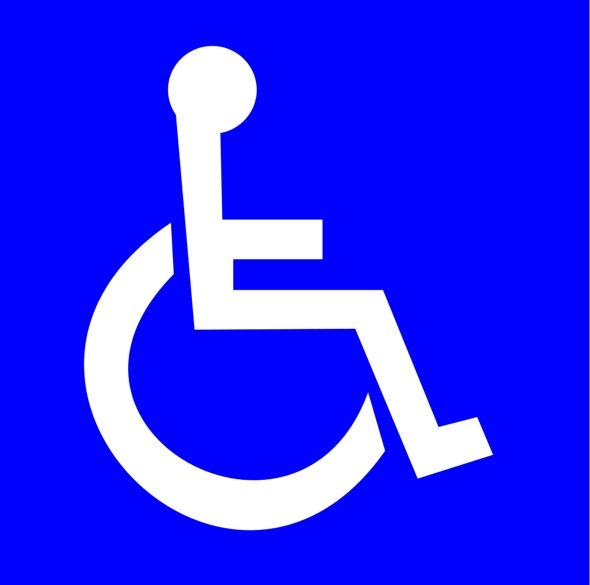
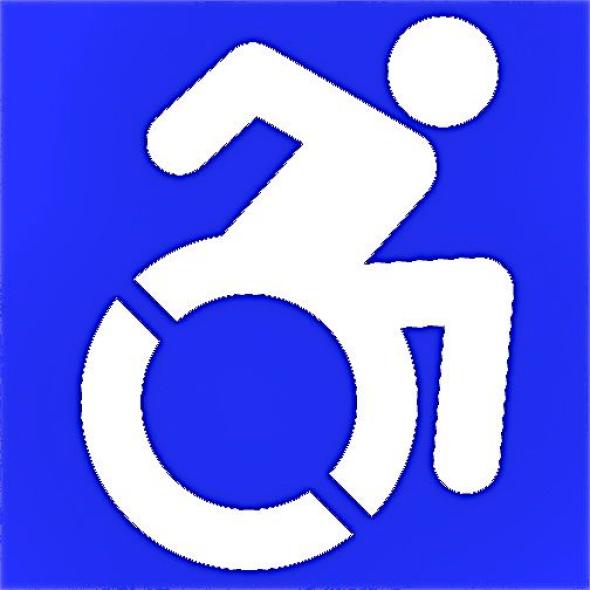
Perhaps one of the more recognized signs, at least without words on it, might be International Symbol of Access, or the handicap sign. A stick figure sitting down upon a wheel is demarcates reserved parking spaces, accessible bathrooms, seating areas on buses, and numerous other areas designed to provide access for the disabled. This sign that you, and others throughout the world, know so well may soon change however. A group called the Accessible Icon Project is calling for a new logo as an alternative. Both are pasted below. The one to your left is the proposed new version. Here is a story from Slate that led me to this- Slate Article. 

As they note in the article, changing this symbol could help the public to redefine its assumptions and beliefs about disability. The sense of movement and activity in the picture on the left is greatly contrasted with that of stasis and immobility on the right. Loja et. al. (2012) note that “ableist thoughts and practices undermine the physical capital of disabled people; it is annihilated by architectural and attitudinal barriers.” The traditional sign is just one example of this concept has it portrays disabled people as immobile and stationary. It creates a sense of wanting to help the individual and guide them to where they want to go. Contrarily, the alternative picture shows that the disabled are capable of moving themselves.

The juxtaposition of these images further highlights the unseen ways in which ableist society others those that are disabled. A picture that some would see as society’s way of reaching out and providing disabled people with easier access to everyday places actually serves to produce a stigmatized view in the ableist mind.


Loja, E., Costa, M.E., Hughes, B., & Menezes, I. (2012). Disability, embodiment and ableism: Stories of resistance, Disability & Society, pp. 1-14.

140219_EYE_99 Percent Invisible1140219_EYE_new symbol1

Oppressed Majority


Oppressed Majority
                A common theme in our class has been identity and how it is created. We know now that our identities are not merely a makeup of biological properties manifested in our personalities and perceptions. We are affected mentally and behaviorally by the way people respond to us. We read that Sara Palin found it necessary to convince her party’s base that she was both motherly and strong in order to fulfill the gender expectations of her target electorate. While ascribed and prescribed identity definitions are a way we make sense of the world they can become pernicious weapons to marginalize and discriminate. I recently watched a short film by Eleonore Pourriat, which reverses gender role expectations. The film’s name is ‘Oppressed Majority’, here, and opens with what appears to be a simple story about a man going about his day. What is quickly realized is he lives in a society dominated by women, each of whom exhibit stereotypical ‘male dominant’ behavior. At first the role reversal comes off light, almost comical, as women act in cliché male behavior. However, there is something much more sinister at work here as the man’s life spirals downward, out of control by the way women constantly barrage him with insults and intimidation. None of the women in this film are sympathetic toward this man’s feelings, and while this is obviously an exaggeration, it is a necessary one, used to convey how piercingly debilitating gender norms may become. The film is a quick journey through the subtle stereotypes which weaken positive self-identity, eventually metastasizing into the highly toxic ones which destroy it.

Monday, February 17, 2014

Mexican Diaspora: De Donde Soy? 


            When someone talks about Diaspora, people usually automatically think about the Jewish Diaspora; never does someone think about the Mexican Diaspora. What does that mean? Mexicans are dislocated? Rinderle discusses in her article that Diaspora is a physical as well as cultural dislocation, and that many Mexicans and Mexican-American find themselves suffering from Diaspora. It was a concept that my brothers and I spoke about without realizing what exactly we were talking about. We constantly argued how technically we were living in Mexico because Colorado used to be part of Mexico, and I never thought about why we were trying to justify living in Mexico as opposed to the United States. No, I never felt like I really belonged here, I always felt like I was happier and more relaxed back in Mexico where we always went at least once since I was a baby. So why is it that I feel this way, why is it that I feel the Diaspora personally? In theory doesn’t Diaspora affect all Americans, so why don’t they all feel the homesickness and yearning to return to the homeland? Who knows, even one of my brothers feels like he is a true blue American, even spoke English fluently years before my other brother and I. I guess it depends on what type of identity we identify with more strongly.

Resources

Rinderle, Susana. (2005). The Mexican Diaspora: A Critical Examination of Signifiers. Journal of Communication Inquiry. V. 29, 4. 294 – 316.


Sunday, February 16, 2014

New Life, Identity and Concerns; living with a life-threatening disorder

Our topic last week really hit home; disability and identity. As some of you might know, I recently developed a severe tree-nut allergy. An allergy is an auto-immune disorder where the immune system is over-reactive and sensitive. My immune system misinterprets the proteins in nuts as a foreign toxin trying to attack my body. The response floods my body with histamines and T-cells that create such a sever reaction that my blood pressure drops quickly, my throat tightens and I risk passing out and having a heart attack. Exposure is cumulative, and each consecutive reaction is more severe than the last. I am required to carry an Epi-Pen and Benadryl on me at all times lest I am exposed. The goal is to minimize risk in my life as much as possible, so I avoid eating a whole variety of processed foods, deserts, cuisine typical of nuts, restaurants with nuts on the menu, etc.

I’ve never really thought of my allergy as a disability though, nor do I really feel comfortable with describing the situation as such.  But according to the Allergy and Asthma foundation of America, it is one of the most pervasive disabilities and disorders, affecting 1 in 5 Americans at roughly 60 million – more than cancer, heart disease and diabetes combined. The amount of people developing food allergies has grown 15-20% in the last 25 years in the U.S., the U.K. and Australia, which are the countries with the highest food related allergies. It is true I can't enjoy many of the things I used to and am restricted in ‘normal’ habits, but I generally felt the term 'disabled' should be reserved for people who had a major debilitating illness or a physical or mental handicap that kept them from functioning as a 'normal' member of society. Part of the reluctance in identifying myself as disabled, I think on a deeper level though, is that I never liked the idea that I might be 'defective'.

When I first developed my allergy it was a major shock, and I used to tell everyone about it. I’ve gotten to the point that I don’t really like talking about it though. There’s many reasons for this fatigue, but I’ve realized part of it is because its awkward reacting to some of the pity responses. Pity was the word that stuck out to me during our discussion. I certainly understand that it is a normal empathetic reaction, and no one means it in an offensive manner.  Overall, I am deeply grateful for the concern and compassion people give. But it does get exhausting having to explain Food Allergy 101 to people. It’s also just really scary and disconcerting that most people have almost 0 knowledge about these common disorders and conditions.

I have had some bad interactions with people regarding my allergy, especially at restaurants. For some reason in the U.S. and most of the world, people who handle food are not required to have any basic knowledge in food allergies, sensitivities and the mechanics of cross-contamination and risk.  It’s only been recently that food labels started posting “May contain ____” or “Processed on the same equipment that handles ___” and this is still not an official mandate by the FDA. It’s primarily done by food producers as a customary measure and to reduce liability. Since restaurants aren’t required to post their ingredients, this makes for a difficult situation. Red Lobster and Olive Garden are the only ones I know that have an actual “allergy” menu and tell you what each dish actually contains. Pizza Hut and Dunkin Donuts are good examples of businesses that are not transparent about their contamination issues and have compromised the safety of many of their consumers.


Many times I’ve asked servers to check with the kitchen staff if their (insert high risk product here) is made in a facility with nuts. Most of the time this request is met with fear, as they realize they know nothing about it and don't want to end up 'poisoning' me. The more defensive individuals will proudly declare “there are no nuts in it." That’s the surest way to reveal that they have no clue how allergies work and what cross-contamination is, and that I should probably steer clear of most everything on the menu.


I can't tell you how dependent I am that other people understand food allergies and anaphylaxis; friends, family, co-workers, food servers, chefs, etc. Seeing what a high demographic suffer from this disorder and the high risk of death associated with exposer, why isn’t there a better job in our society educating students about this in health classes, and also holding the food industry to a higher standard?  Right now the only way to inform is one-on-one interactions and hoping people take the initiative to research and educate themselves, but I have few expectations here granted I don't even think anyone in my family has ever taken the time to google it or read up and depend on me to tell them everything.


Overall, why aren't we educating our society better about illnesses, disorders and disabilities as a whole? As we discussed and saw in the presentation, there are elements of shame and embarrassment from the disabled community that would greatly be helped with better education, appreciation and awareness by the general public.


http://www.aafa.org/display.cfm?id=9&sub=30